
Dental Crowns
Dental Crowns in Terre Haute, IN
At Midtown Dentistry, we provide restorative solutions that protect damaged teeth and restore confident smiles. When a tooth is weakened by decay, fracture, or extensive dental work, a dental crown in Terre Haute, IN, can rebuild its strength and appearance while preserving your natural tooth structure. Our team focuses on precise planning and high-quality materials so that your restoration looks natural and functions comfortably for years to come.
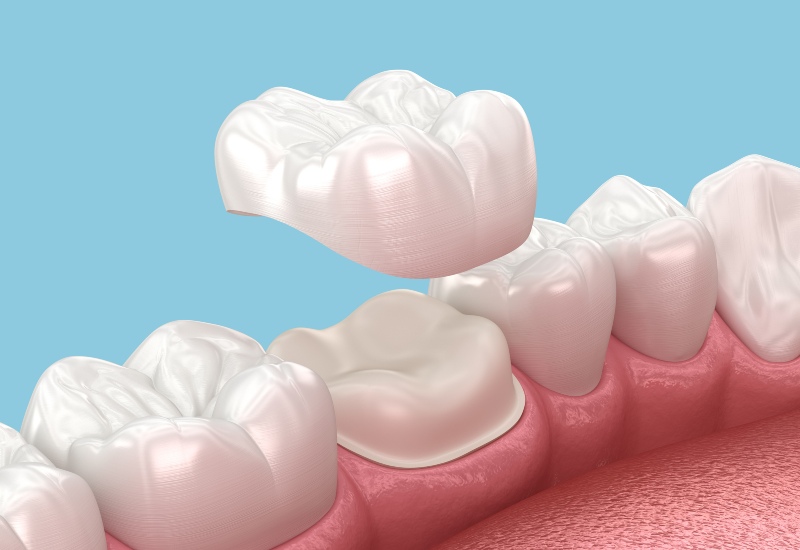
What Is a Dental Crown?
A dental crown is a custom-made cap that fits over the entire visible portion of a tooth. It is designed to restore the tooth’s shape, size, and strength while improving its appearance. Once bonded in place, the crown covers and protects the underlying tooth from further damage.
Dental crown treatment is often recommended when a filling is not enough to repair a tooth. Crowns can hold together a cracked tooth, reinforce a tooth after root canal therapy, or restore a dental implant. Because the crown is tailored to your bite and surrounding teeth, it blends in while providing durable support.

Conditions Dental Crowns Can Treat
Dental crowns are versatile restorations used in many situations. We may recommend a dental crown when a tooth has significant structural damage or when cosmetic improvement is needed in addition to protection. Common reasons for crown placement include:
- Severely decayed teeth that cannot support a large filling
- Cracked or fractured teeth that need reinforcement
- Teeth that have undergone root canal therapy
- Worn-down teeth from grinding or erosion
- Misshapen or discolored teeth requiring cosmetic restoration
- Support for a dental bridge or to top a dental implant
Types of Dental Crowns
There are several types of dental crowns available, and the right option depends on the location of the tooth, aesthetic goals, and functional needs. A porcelain dental crown is often chosen for front teeth because it closely mimics natural enamel. Metal-based options may be recommended for back teeth where strength is the primary concern. We review these factors carefully before recommending a solution. Common types of dental crowns include:
- All-ceramic or porcelain crowns
- Porcelain-fused-to-metal crowns
- Metal crowns made of gold or other alloys
- Zirconia crowns
The Dental Crown Procedure: Step-by-Step
Understanding the dental crown procedure can help you feel prepared for treatment. In most cases, placing a crown requires two appointments. First, we examine the tooth and take digital images or impressions. The tooth is gently reshaped to create room for the crown. After preparation, we place a temporary dental crown to protect the tooth while your permanent restoration is fabricated in a dental lab. At your second visit, we remove the temporary dental crown and check the fit, color, and bite of the final crown. Once everything is properly aligned, the crown is securely bonded in place. The result is a stable, natural-looking restoration designed to function like a healthy tooth.
Materials Used for Dental Crowns
Selecting the right dental crown material plays a key role in both performance and aesthetics. Modern dentistry offers several reliable materials that balance strength and natural appearance. Porcelain and ceramic materials are popular for their lifelike translucency and color matching. These are commonly used when restoring visible teeth. Zirconia provides exceptional durability and is resistant to chipping. Metal alloys, including gold blends, offer long-lasting strength and are often placed on molars where chewing forces are greatest. During your consultation, we discuss which dental crown material will best support your tooth.
Caring for Your Dental Crown
A dental crown does not require special maintenance beyond good oral hygiene, but proper care is essential for long-term success. Daily habits protect both the crown and the natural tooth structure beneath it. With consistent care, your crown can remain comfortable and secure for many years. We recommend the following:
- Brush twice daily with fluoride toothpaste.
- Floss carefully around the crown to prevent plaque buildup.
- Avoid chewing hard objects like ice or pens.
- Wear a nightguard if you grind your teeth.
- Schedule regular dental checkups and cleanings.
Longevity, Benefits & Results
Dental crowns are designed for durability. Depending on the material used and your oral hygiene habits, a crown can last 10 to 15 years or longer.
The benefits of a dental crown extend beyond appearance. Crowns restore proper chewing function, protect weakened teeth from further damage, and help maintain alignment by preventing shifting. A well-crafted crown also supports clear speech and overall comfort.
Because each crown is customized, the final result is tailored to your smile. We focus on precise fit and color matching so the restoration blends naturally with surrounding teeth.
Frequently Asked Questions
Does getting a dental crown hurt?
The dental crown procedure is performed with local anesthesia to keep you comfortable. Mild sensitivity after placement is possible but typically resolves quickly.
How long does a crown appointment take?
The first visit usually takes about 60 to 90 minutes, and the second visit is often shorter. Timing can vary depending on the complexity of the case.
Can a crowned tooth still get cavities?
Yes, decay can develop at the margin where the crown meets the natural tooth. Consistent brushing, flossing, and regular exams help prevent this.
Is a porcelain dental crown strong enough for back teeth?
Modern porcelain and ceramic materials are durable, but we may recommend zirconia or metal-based options for molars that experience heavy biting forces.
Schedule Your Dental Crown Consultation
If you have a damaged or weakened tooth, contact Midtown Dentistry in Terre Haute, IN, to learn whether a dental crown is right for you. Call our office today to schedule a consultation and discuss your restorative options with our team.